Global Safety Simplified - Integrating Expert Consultants And Smart Software
In an age where businesses operate in many countries that each possessing its own patchwork of local regulations. The traditional approach to health and safety management has reached its breaking point. The use of spreadsheets and email chains, and dispersed reporting systems leave management teams unable to determine if their organizations are compliant and where it is exposed [citation:11. The fusion of international health and safety professionals with sophisticated software platforms represents fundamental shifts in how multinational organizations safeguard their employees and comply with their legal obligations. This isn't simply about digitizing existing processes, it's all about creating one point of truth that connects local and headquarters which transforms the complexity of regulatory requirements into tangible data, and assures that human judgment is used to inform every decision. Here are the top ten crucial aspects to consider about this emerging approach to worldwide safety and security management.
1. The Patchwork Quilt Problem Demands a Universal Solution
There isn't a universal regulation on safety and health. Companies operating across multiple jurisdictions have to manage a complex array that includes local laws, document requirements, and enforcement regimes that vary dramatically from country to country [citation:1]. A company that has offices in 10 countries must deal with ten distinct laws, yet traditional management systems give no one place to assess whether these requirements are being fulfilled. Modern integrated platforms alleviate this by providing leadership teams with one dashboard that shows compliance status across every site and in every nation in real-time [citation 1(1). This transparency changes international safety administration into a proactive, fragmented operation into an effective, functional unit.
2. Software allows visibility, but Consultants Offer Control
Most successful integrations realize the fact that technology alone isn't able to solve difficulties with international compliance. One industry expert said as a result "Software alone doesn't solve the issue of international compliance. There are people on area who understand local laws understand the language and understand what data is telling you" [citation: 1(1). The platform offers you an understanding to where you have gaps, and Consultants give you control over the resolution of those. This partnership model guarantees that data can trigger action, and not just awareness. Also, local nuances are addressed by experts who are aware of the client's global framework and the particulars of local legislation [citation:1].
3. Real-Time Compliance Tracking, Across Borders
Modern integrated platforms offer the ability to monitor in real-time health and security conditions in every area within which an organization operates [citation:1]. This goes beyond simply keeping records to active gap analysis. The software constantly identifies where an business is not complying with local legal requirements, enabling proactive intervention before regulatory bodies or incidents create a need for action. For multinational companies, this represents a shift from backward-looking, periodic audits to ongoing, forward-looking compliance management [citation:4This is.
4. The rise of Truly Integrated Consultant-Software Partnerships
The market is witnessing a surge in strategic partnerships between consulting firms and technology providers and is moving beyond the simple concept of licensing of software to more integrated model of service. For instance the specialist consultancies are working with platform suppliers to offer digitally enabled services where expert consultants use the same client's system [citation:8]. The same is true for global recruitment as well as consulting firms have joined forces with AI-powered companies that offer safety software to provide their clients with data-driven improvement recommendations and feedback on mitigation in real-time [citation:6The citation is 6. These partnerships recognise that the future belongs to organizations that combine understanding of the industry with new technology.
5. Automated Audit and Assessment Using Expert Oversight
Integrated platforms are revolutionizing how International audits and tests are performed. They automate scheduling and task assignment, as well as reminders, and escalation processes assuring that audits take place when they should and they are monitored to resolution [citation: 5]. Mobile auditing capabilities enable field-level auditors in conducting audits online or offline, taking notes of findings right away and triggering corrective action in real-time [citation: 5five. The human element remains central to all audits. Observers interpret findings, do root cause analysis and make sure that corrective actions are addressing the root causes of operational and cultural issues not just surface-level infractions.
6. Centralised Documentation with Decentralised Access
One of the greatest challenges for global organisations is managing the sheer volume of health and safety documentation--policies, risk assessments, training records, inspection reports, and more--across multiple countries and languages. Integration platforms can provide central cloud storage available to both local and headquarters teams, while maintaining version control and audit trails [citation:11. This ensures that everyone can work from the same files while respecting local documentation requirements as well as ensuring that regulators and auditors can view complete records immediately instead of waiting on manual compilation.
7. Strategic Alignment to Evolving International Standards
The international standards landscape is undergoing significant transformation, with ISO 9001 (quality), ISO 14001 (environmental), and ISO 45001 (occupational health and safety) all entering revision cycles through 2026 and 2027 [citation:7][citation:10]. The revisions focus on digital transformation as well as organisational resilience, mental health, psychosocial risk-management as well as their integration to ESG frameworks [citation: 1010. The integrated software-consultant solutions are positioned to help organisations navigate the changes ahead, with tools that are built to fit with the changing requirements and with consultants who comprehend both the demands of the present and the new expectations [citation: 9].
8. Language and Cultural Competence Built In
Global safety and security requires more than just translation. It requires the ability to communicate with people from different cultures. Modern integrated services ensure local experts aren't only qualified to international standards, but they are also fluent in both English and local languages and have been trained for both local and the global framework of the client [citation: 1(1). This dual proficiency assures that the communication between local and headquarters runs smoothly, and local cultural influences on safety are adequately understood, and that safety initiatives are able to resonate with local workers instead of being seen as an imposition from abroad.
9. from Compliance Burden to Strategic Advantage
Organizations that are able to successfully integrate consultant expertise with software that is smart find that safety management changes away from being a compliance burden to a strategic advantage. Real-time dashboards provide insights that inform business decisions--identifying high-risk areas before expansion, benchmarking performance across regions, and demonstrating robust governance to investors and insurers [citation:1][citation:9]. The data collected by integrated systems supports continuous improvement and allows organizations to go beyond incident response that is reactive to a more predictive approach to risk management.
10. Scalability Without Complexity Sacrifice
Perhaps the most compelling advantage that integrated software solutions offer is their ability to scale. No matter if an organization operates in five or fifty countries and fifty, an identical platform, and network can scale to meet their needs, without adding difficulty [citation:44. New sites can be added equipped with compliance frameworks pre-configured to local requirements, plugged immediately to the worldwide dashboard, and aided by local consultants who can understand both local contexts and standard of the global organization [citation:11. As businesses grow, their safety management capability will also grow. This does not happen in the background, but as an integrated function beginning from day one. Follow the recommended health and safety assessments for more info including safety report, health and safety specialist, safety moment, safety at construction site, safety meeting, safety precautions, occupational safety and health administration training, risk assessment, workplace safety tips, hazards at work and top health and safety services for website tips including safety at construction site, occupational safety and health administration training, safety inspectors, safety video, health at work, safety tips for work, jobsite safety analysis, personnel safety, occupational health and safety careers, health and safety and environment and more.
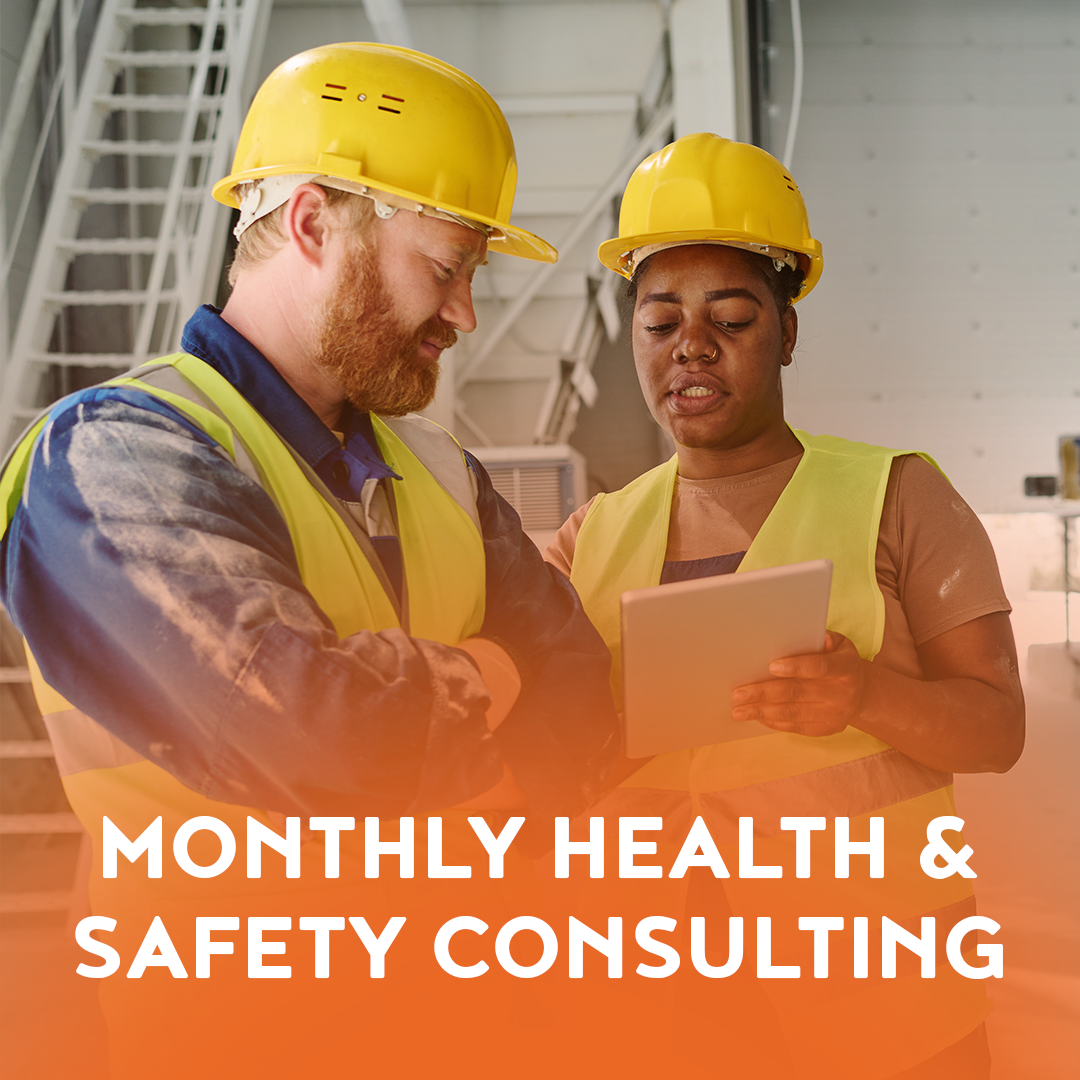
Safety Without Borders: Connecting Local Consultants With International Software Platforms
The concept of "safety without borders" may sound like an idealistic dream--a place where expertise is available across borders that a worker from any nation can benefit from expert knowledge of safety specialists everywhere, where regulatory compliance is seamless and occurrences are prevented by the global network of intelligence that is applied locally. The reality is more chaotic, but exciting. It is true that borders are important in safety. Laws vary from country to country. Cultures affect how work is completed and how safety is considered. Languages define whether messages will be accepted or misinterpreted. The aim isn't to erase borders, but to create connections that cross them. This allows local experts, deeply rooted within their contexts to make use of global platform software that gives them global visibility and access to tools while respecting their local sovereignty and analysis. This is the meaning of security without borders: It's not a global without borders but a connected one.
1. Local Consultants remain the Principal Actors
The most important aspect to comprehend concerning this type of model is that local consultants will not be displaced or weakened by international software systems. They remain the key actors, the ones who are aware of the local regulatory landscape and local workers, particular hazards that are local and the local solutions. The software aids them in offering tools that increase their capabilities instead of systems that limit their judgement. This principle--technology serving local expertise rather than substituting for it--distinguishes successful integrations from failed impositions.
2. Software Provides Consistency Without Uniformity
Multinational organisations require consistency. to be able to trust that their the safety standards are met to acceptable standards everywhere they work. But uniformity isn't necessarily the goal. An identical standard applied in many different situations can lead to absurd results. International software platforms allow for consistency and uniformity through the provision of similar frameworks to local experts who use with a sense of. This software asks the same questions to different people and is able to adjust to different regulatory requirements, and creates results that're comparable without being identical. The consistency comes from the same principles in place locally, not the same checklists that are enforced globally.
3. Data flows both ways
In conventional models, data is transferred from the periphery to the centre. Local sites report up to headquarters, and the latter aggregates and analyses. Safety without borders enables bidirectional flow. Local consultants input data that help global pattern recognition. However, they also receive back-benchmarks, which show how their performance compares to their peers, alerts about emerging risks identified elsewhere and the lessons that have been learned from other institutions that are faced with similar challenges. The software becomes a conduit to transfer knowledge in both directions, enriching local practice with global insight as well as bringing global analysis into the local setting.
4. Language Barriers Are Technical, Not Insurmountable
International software platforms have largely solved the issue of language through advanced technology for localisation. Consultants employ their native languages with interfaces, documentation and help available in a multitude of languages. What's more, the platforms preserve the nuances of language to a degree that traditional translation models couldn't. When a consultant in Thailand takes note of an observation made in Thai then the record is in Thai to be used locally, while metadata and structured fields can allow for global analysis. Software is able to translate for cross-border communications, but it is not a requirement for everyone to work in another language that is not their own.
5. Regulatory Compliance Becomes Systematic Rather than Heroic
Local consultants that do not have foreign platforms and networks, keeping up with regulatory changes is a brave individual effort. They have to keep track of government publications or attend events organized by industry, manage networks, and ensure they don't forget something vital. International platforms consolidate this data by aggregating regulatory changes across jurisdictions and alerting those affected by the changes automatically. When Nigeria has updated its factory inspection requirements, every employee working in Nigeria is informed immediately, with the particular changes highlighted and consequences discussed. Compliance becomes systematic rather than dependent on the individual's attention to detail.
6. Cross-Border learning accelerates
A consultant from Brazil that has come up with a practical way to control high temperatures in sugarcane farms is able to offer insights that can benefit colleagues in India that are experiencing similar issues. In systems that are not connected, these insights are local. Connected platforms enable cross-border learning in a massive way. The Brazilian consultant records their method in the platform, while tagging it with relevant keywords and contexts. In the event that an Indian consultant is searching for "heat pressure" or "agricultural laborers" as well as "tropical conditions," they are not merely looking for theoretical guidance but practical methodological advice from a person who faced similar difficulties. The pace of learning increases across borders.
7. Accident Response Profits from Distributed Expertise
When incidents are serious, local consultants need all the assistance they can get. International platforms enable rapid mobilisation of expert knowledge distributed. Within days of an incident the platform can connect the local consultant to colleagues who have dealt with similar situations elsewhere, make available relevant protocols for investigation and regulatory requirements, and facilitate sharing of sensitive information with the headquarters lawyers and headquarters. The local consultant remains in charge, but they are not the only ones to be relying on international expertise made available by the platform.
8. Quality Assurance Becomes Continuous Rather than a periodic
Locally-based firms have historically guaranteed quality through periodic audits. These include sending a senior person or someone else to audit the work on a regular basis. This is costly disruptive, inefficient, and outdated. International platforms provide continuous quality assurance via embedded checks. The software will check whether consultants are following procedures, completing required documentation, as well as meeting time-bound response commitments. When patterns show signs of quality issues, they trigger targeted reviews, rather than being patiently waiting to schedule audits. Quality becomes an integral part of everyday tasks rather than being examined at intervals.
9. Local Consultants Get Global Career Opportunities
If you are a skilled safety professional in emerging economies or in remote areas International platforms provide job opportunities that were previously not available. Their work becomes visible to global clients who would never be aware of the existence of these platforms. Their expertise, reflected in platforms' performance, is rewarded with referrals and opportunities that are not available in their own market. The platform becomes not just an instrument, but a certificate of competence that travels across boundaries. The network attracts professional with a passion onto the network, elevating quality for everyone.
10. Trust Is Built Through Transparency
The biggest obstacle to connecting local consultants to international platforms has been trust. Headquarters fears losing control; local consultants worry that they will be micromanaged from an inaccessible distance. Transparency in shared platforms helps address both concerns. The headquarters can track the work of local consultants but without direct control over every action. Local consultants are able to demonstrate their capabilities through tangible proof rather than self-promotion. Both sides work from similar information, the same dashboards, the same evidence. Trust is not based on faith but from shared visibility to work together. This transparency is the foundation upon which safety without borders is built, which allows connection as a whole without the need for control or isolation. Follow the best health and safety audits for site advice including safety companies, employee safety training, safety consultant, health safety and environment, safety management system, office safety, safety tips for work, worker safety, job safety assessment, safety tips and more.

Comments on “20 Definitive Ways On International Health and Safety Consultants Software”